/apps/enel-x-digital-ecosystem/templates/page-press

Skip to Content

Behind the Scenes of a Demand Response Dispatch

How does a power dispatch get done? On an ordinary day, what is happening on the grid? Read on to learn how businesses create benefits with demand flexibility.

On a summer evening, the sun is about to set, office workers are heading home, and the world carries on as usual.


Ding, ding! At the Enel X dispatch center, Demand Response dispatch notifications ring one after another. Hundreds of businesses across Taiwan receive the alert by phone, and push notifications pop up on their mobile apps at the same time. Although all appears normal from the outside, the grid is under imbalance due to certain issues that could affect everyone. Dispatchers work through each business supporting the grid with practiced efficiency, coaching every one of them to deliver the load reduction they committed to in advance. Through Enel X’s Virtual Power Plant (VPP), businesses in different locations temporarily adjust their electricity use at the same time. At this moment, everyone shares a common goal: to help the grid ride out fluctuations and keep the power supply stable.


To outside observers, it is just another ordinary dusk. Yet behind every successful dispatch lies preparation and contribution that should not be underestimated.

 

How Does Demand Response Work? Power Dispatch and Businesses’ Demand Flexibility

When supply and demand on the grid fall out of balance due to a sudden generator trip, a sharp rise in system load, or an error in the supply and demand forecast, resources participating in Taipower’s Energy Trading Platform, including Enel X’s VPP, receive a dispatch notification. Enel X then immediately notifies the commercial and industrial customers in its aggregated portfolio to temporarily reduce power consumption. Actions taken by these customers help maintain grid balance by providing what is known as Demand Response ancillary services.  In return, participants earn revenue.


Response times differ by ancillary service program. Resources participating in the Regulation Reserve program through behind-the-meter storage or batteries must respond within 10 seconds. For Spinning Reserve and Supplemental Reserve, businesses must reduce consumption to the pre-planned standby capacity within 10 minutes and 30 minutes respectively, and sustain it for one hour and two hours respectively.

How Can Businesses Create Multiple Benefits from Existing Energy Resources?

Temporarily reducing energy use does not mean halting production lines or shutting down all equipment. The key is to identify the demand flexibility resources on site that can be temporarily switched off, rescheduled, or shifted to another power source. The resources that can participate, and the ways consumption is adjusted, vary by industry. Common resources include behind-the-meter energy storage systems, which can serve a site’s own energy resilience needs as well as large energy user obligations, along with backup generation equipment, high-consumption process equipment, HVAC systems, and chillers. In principle, all types of commercial and industrial customers could provide Demand Response ancillary services to the grid. Those able to reduce consumption by 1,000 kW or more have an even greater opportunity to generate significant financial benefits.


By providing ancillary services through our VPP, businesses not only help the community by maintaining a stable power supply, but also earn revenue. The actual load reduction achieved during dispatch can also be recognized as energy-saving performance. Most importantly, this approach to energy management helps strengthen overall grid resilience, reduces the need to build additional power plants at great expense to meet short-term demand, and promotes the integration and use of renewable energy.

What Are the Steps Before a Business Formally Participates in the Energy Market?

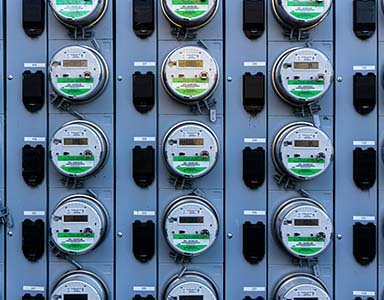
Before a business formally enters the ancillary services market, Enel X draws on its extensive global and local market experience to work with the business on a suitable energy reduction plan, including the time windows for being on standby and the capacity that can be safely reduced or shifted. Once the plan is finalized and the contract is signed, Enel X installs a meter on site and helps arrange capability tests that meet Taipower’s requirements.


The capability tests fall into two main types: communication capability tests and performance capability tests. The former ensures that data transmission between the participating resource and Taipower’s Energy Trading Platform is timely and accurate. The latter verifies that the resource can properly deliver the corresponding load reduction or dynamic response at its declared capacity. After passing the tests, the business can apply to go live. Meanwhile, Enel X also provides the business with comprehensive training on dispatch execution. After go-live, Enel X’s professional team continues to offer real-time support before, during, and after each dispatch to help businesses participate smoothly in the market.

Day-to-Day goal of a VPP Dispatcher: Safeguarding Grid Resilience and Keeping Businesses Ready

Once live, dispatchers confirm the next day’s standby capacity with each business every day and help place bids in the energy market. If a business cannot standby because of equipment maintenance or other special circumstances, it can adjust its standby capacity and standby hours before the specified deadline. Enel X regularly monitors each business’s energy use and communication status. If a business lacks sufficient standby capacity during its standby window, or its communication connection is abnormal, it is alerted immediately. This ensures that when a dispatch event occurs, every resource participating in the market can carry out its load reduction and fully answer the dispatch call. If a business runs into difficulty executing a dispatch in the moment, dispatch center staff step in right away to help clear the obstacle and fulfill the dispatch by all possible means.

Every Successful Dispatch Is the Result of Joint Effort by Businesses and our VPP in support of the grid

From the energy reduction plan done in advance, to capability tests and daily monitoring, to real-time response when a dispatch event occurs, every successful Demand Response dispatch depends on close collaboration between businesses and the Enel X team.


Through Enel X’s VPP, businesses can turn demand flexibility into support for the grid, creating additional benefits while keeping their operations running. For the power system, these distributed resources that can respond to dispatch in real time help balance supply and demand, strengthen grid resilience, and promote the integration and use of renewable energy.


Every kilowatt of demand flexibility could become a key force in strengthening grid resilience and firming renewable power. Those workers returning home on summer evenings would be very grateful if they knew companies were on standby to ensure everything continued as normal. Is your business making the most of its potential for demand flexibility?  

Contact us and learn how you could join the market today!